



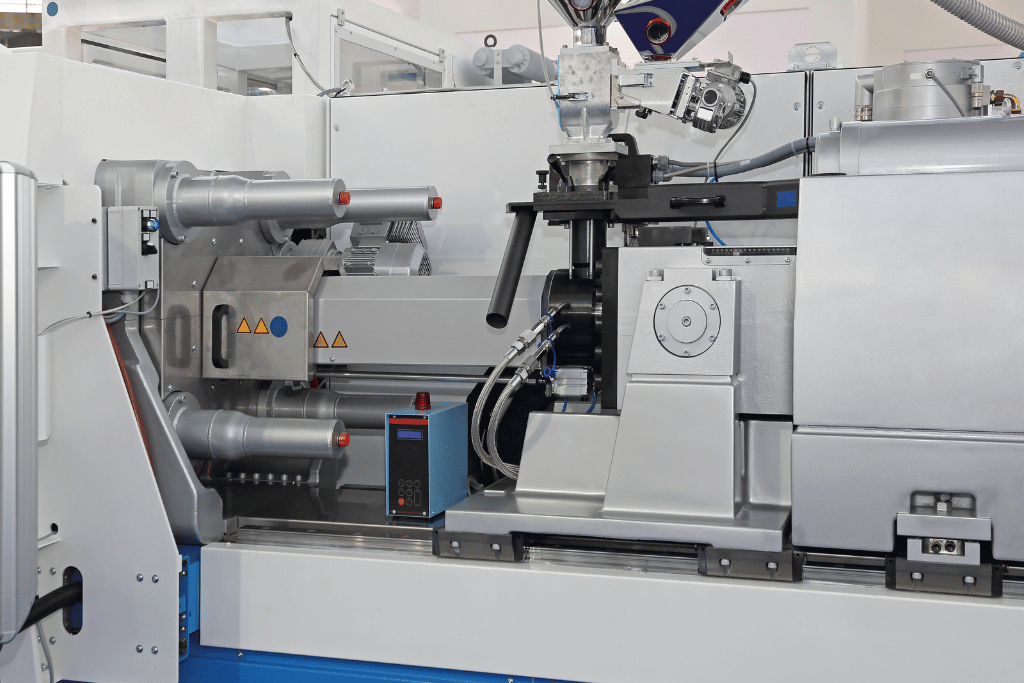
When a product team is racing from prototype to production, the biggest enemy is uncertainty. You might have CAD that looks “final,” but real-world testing, regulatory requirements, and supply chain realities still have a way of changing plans. That’s where low volume injection molding earns its keep.
Low volume molding is often used for bridge production, pilot runs, early market launches, and validation builds. It gives teams production-grade parts sooner, without forcing a full-scale tooling investment before the design and demand are fully proven.
What “low volume” really means in injection molding
Low volume injection molding typically refers to production-intent parts made in smaller quantities, often used for validation, field trials, and early customer deliveries. The exact volume range depends on the part and program, but the underlying idea is consistent: you need molded part consistency without committing to high-cavitation, long-life tooling too early.
Compared to 3D printing or soft prototype methods, low volume injection molding delivers parts that behave like real production components because they are molded in the same way, with similar resins and process conditions.
Why teams use low volume injection molding
Low volume molding is less about “cheap parts” and more about buying time and reducing risk. It helps teams:
- Validate fit, function, and assembly at production intent
- Run field testing with realistic materials and geometry
- Support early market launches or limited releases
- Reduce risk before committing to full production tooling
- Iterate faster when small design changes still happen
This is especially helpful when your product includes seals, press fits, snap features, or tight mating requirements. Many issues only show up when you build a meaningful quantity of parts and run them through real assembly and real users.
Tooling options for bridge production
Bridge production often uses tooling strategies optimized for speed and agility. The best approach depends on your part complexity, performance needs, and timeline.
A few common bridge tooling paths include:
- Bridge tools engineered for short runs: built to produce stable parts and survive planned pilot quantities
- Prototype-to-bridge progression: starting with faster tooling approaches and stepping up once the design is locked
- Production-intent tools with staged cavitation: sometimes teams start with fewer cavities and scale up later
Your supplier should be able to explain which approach matches your volume and quality needs, and what tradeoffs exist in cost, lead time, and expected tool life.
How to estimate cost for low volume programs
Low volume programs often look more expensive per unit than long-run production, because fixed costs (tooling, setup, sampling, validation) are spread across fewer parts. That does not mean it is the wrong move. It means the total program cost needs to be viewed as “risk-managed speed to market.”
Key cost drivers include tooling scope, resin, cycle time, setup frequency, and inspection requirements. If you want accurate pricing, ask your supplier to clearly state assumptions around:
- cavity count
- cycle time
- press size
- resin selection and drying requirements
- inspection plan and critical-to-fit dimensions
- packaging method and handling requirements
That clarity is what prevents “quote shock” when the program transitions into full production.
Validation builds and field testing: the real value
Bridge production is powerful because it creates a meaningful sample size. You can run assemblies, measure dimensional drift, evaluate performance under temperature swings, and find issues that prototypes often hide. For teams who need confidence before scaling, low volume injection molding provides the learning loop that keeps full production from turning into a costly scramble.
When you should not use low volume injection molding
If your design is changing weekly or you only need a handful of samples, you may be better served by prototyping methods first. Low volume injection molding is most effective when the design is close enough to final that lessons learned will translate into production.
A smart bridge strategy reduces launch risk
If your team needs production-intent parts quickly, rapid injection molding and low volume strategies can shorten timelines and reduce risk. The best result comes from pairing the right tool approach with a tight DFM review so the bridge build is a stepping stone to stable production, not a detour.